
Home›Guides›Energy & Insulation
Energy & Insulation
Federal Tax Credits for Home Energy Upgrades in 2026
There is currently no federal tax credit for home energy upgrades installed in 2026. Both major residential credits — the Energy Efficient Home Improvement Credit (Section 25C, covering insulation, windows, doors, and HVAC) and the Residential Clean Energy Credit (Section 25D, covering solar and battery storage) — expired for any property placed in service after December 31, 2025. If your project was completed in 2025, you can still claim the credit on the return you file in 2026. For anything installed in 2026 or later, the federal credit is gone — but state, utility, and financing options still exist.

The short version
- Both credits ended on 31 December 2025. Sections 25C and 25D stopped outright — this was a hard stop, not a phase-out.
- 2025 work can still be claimed. If it was placed in service on or before that date, it goes on the 2025 return using Form 5695.
- Check any 2026 quote carefully. A line item still showing a federal credit is stale, and it is no longer money you will get back.
- The case for the work did not change. The credit was always a bonus on top of the savings, not the reason to do it.
What changed: the One Big Beautiful Bill Act
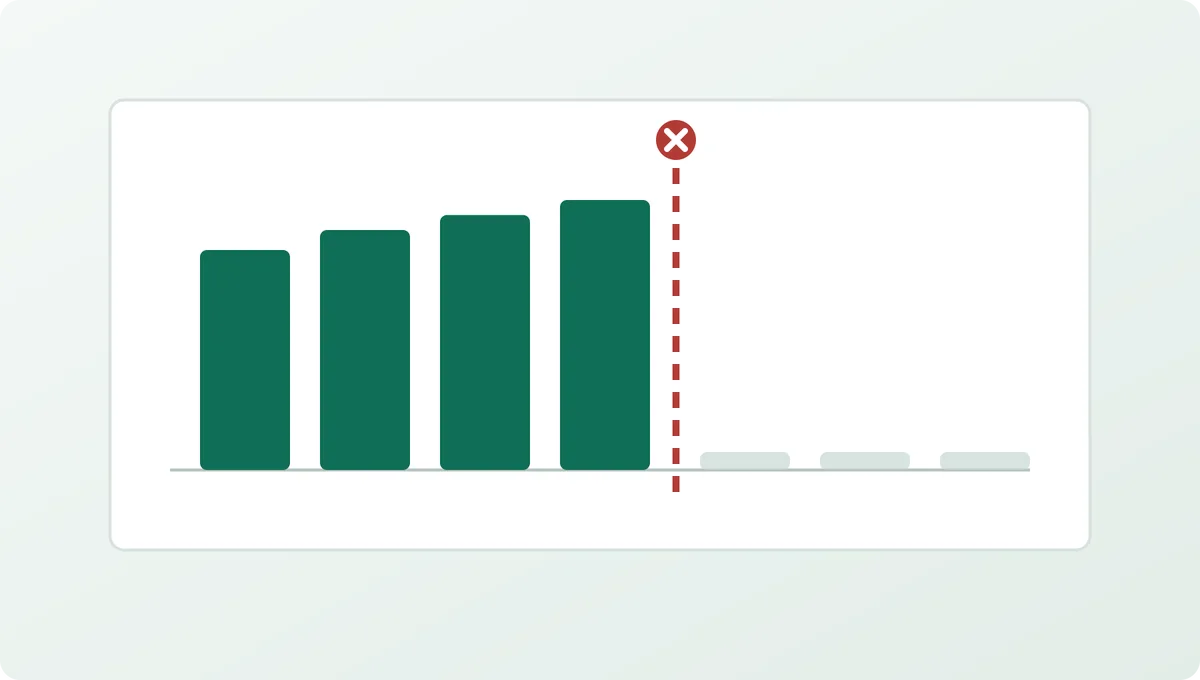
For homeowners, 2026 marks a real turning point in federal energy incentives — not a gradual phase-out, but a hard stop. The Energy Efficient Home Improvement Credit (Section 25C) and the Residential Clean Energy Credit (Section 25D) were both created and expanded under the 2022 Inflation Reduction Act, originally scheduled to run through 2032. The One Big Beautiful Bill Act, signed into law on July 4, 2025, accelerated both terminations to December 31, 2025 — roughly seven years earlier than originally planned. This wasn't a reduction in credit value or a lower cap; it was a full repeal for any qualifying property placed in service after that date.
What these credits used to cover
Understanding what existed is useful even now, since it explains what you may still be eligible to claim for 2025 work, and what quotes referencing these numbers actually mean.
| Credit | What it covered | Value (while active) |
|---|---|---|
| Section 25C — envelope bucket | Insulation, air sealing, windows, doors, home energy audits | 30% of materials, up to $1,200/yr combined |
| Section 25C — equipment bucket | Heat pumps, heat pump water heaters, biomass stoves | 30% up to $2,000/yr, separate from the $1,200 bucket |
| Section 25D | Solar panels, battery storage, geothermal systems | 30% of total cost, no annual dollar cap |
Within the $1,200 envelope bucket, individual categories carried their own sub-caps — windows were capped around $600, exterior doors around $250 per door up to $500 total, with the remainder available for insulation, air sealing, and audits. The 25C credit was nonrefundable and had no lifetime limit, meaning it reset every year it was active — but with no carryforward, any unused portion in a given year was simply lost.
Can I still claim the credit for 2025 work?
Yes, if your project was completed and placed in service on or before December 31, 2025. You can claim it on the 2025 federal tax return you file during the 2026 tax season, using IRS Form 5695. This applies to both 25C (envelope and equipment upgrades) and 25D (solar and battery systems). If your project is scheduled for 2026 or later, neither credit applies, regardless of when you signed the contract or made a deposit — what matters under current law is when the property was actually placed in service.
Watch out for stale contractor quotes
This is worth saying plainly: if a 2026 quote for insulation, windows, HVAC equipment, or solar includes a line item like "Section 25C federal tax credit –$600" or "30% federal solar credit," that line item is no longer valid. Several independent sources tracking this issue have flagged that many contractor quotes and websites still circulate pre-repeal numbers, either because they were written before the law changed or simply never updated. A contractor still quoting expired federal incentives is worth a direct question about what else in their estimate might be outdated.
What's still available in 2026
With the federal credits gone, the incentive landscape shifts to a more fragmented, location-dependent picture:
- State and utility rebates — many states, municipalities, and utility companies run their own rebate or incentive programs independent of federal law, and these vary significantly by location. The DSIRE database (Database of State Incentives for Renewables and Efficiency) is the most reliable place to check what's available where you live.
- IRA Home Energy Rebates — a separate program from the 25C/25D tax credits, administered state-by-state, still operating in some states with updated eligibility rules (generally electric-to-electric equipment swaps only). Availability and rules vary enough that confirming directly with your state energy office is worthwhile before assuming eligibility.
- Low-income weatherization assistance — income-qualifying households may still have access to weatherization assistance programs independent of the expired federal tax credits.
Is it still worth upgrading without the credit?
For most of these projects, yes — the credit was always a bonus on top of the underlying case for the upgrade, not the reason to do it. Attic insulation still delivers roughly 15% average savings on heating and cooling costs according to EPA modeling, with payback typically in the 2-7 year range depending on your starting point. Rising electricity rates in many states are actually shortening payback periods year over year, since every kilowatt-hour you don't use is worth more each year than the one before it. Our attic insulation cost calculator, window replacement cost estimator, and spray foam insulation cost calculator all price these projects on their own merits — energy savings and comfort — without assuming a federal credit that no longer applies for 2026 installations.
Solar is a somewhat different calculation now that the 30% credit is gone for direct-purchase systems: realistic payback without it typically runs 9 to 14 years rather than the 6 to 9 years often quoted when the credit was active. It's still a reasonable long-term investment for many homes, particularly those with high electric bills, but it's a longer-horizon decision than it was in 2025. Our solar panel installation cost calculator reflects this updated math directly, including your local state and utility incentive considerations.
Frequently asked questions
Is there a federal tax credit for insulation or windows in 2026?
No. The Energy Efficient Home Improvement Credit (Section 25C), which covered insulation, windows, doors, and HVAC equipment, expired for any property placed in service after December 31, 2025, under the One Big Beautiful Bill Act.
Is the 30% solar tax credit still available?
No, not for direct-purchase systems. The Residential Clean Energy Credit (Section 25D) expired for expenditures made after December 31, 2025. Solar leases and power purchase agreements may still indirectly access a separate commercial-side credit through a different timeline.
Can I still claim a credit if I completed my project in 2025?
Yes. If your qualifying improvement was placed in service on or before December 31, 2025, you can claim the applicable credit on the 2025 federal tax return you file during 2026, using IRS Form 5695.
Will Congress bring back these tax credits?
As of mid-2026, no replacement legislation has been introduced to restore the Section 25C or 25D residential credits. It's reasonable to watch for future legislation, but current planning should assume no federal credit applies to 2026 or later installations.
Put a number on it
Estimate attic insulation by material, target R-value and attic area — with estimated annual savings and…
Open the Attic Insulation Cost Calculator →Sources & standards
- IRS — About Form 5695, Residential Energy Credits
- IRS — Home Energy Tax Credits
- 26 U.S.C. §25C — Energy Efficient Home Improvement Credit
- 26 U.S.C. §25D — Residential Clean Energy Credit
This guide is general information, not professional advice. Building codes, permit requirements and safety rules are set locally and change over time — your building department and a licensed professional are the authorities for your property. Cost figures are HomeEstimatorHub estimates, not quotes — see how they are calculated.
Keep reading
More guides in Energy & Insulation.
Price it
Estimators for the work this guide describes.