
Home›Guides›Energy & Insulation
Energy & Insulation
How Much Can Attic Insulation Really Save You on Energy Bills?
On average, air sealing and adding attic insulation saves homeowners about 15% on heating and cooling costs — roughly 11% on total energy bills — according to the EPA's ENERGY STAR program. That's typically $200 to $600 a year, with a payback period of 2 to 7 years depending on your starting point, climate, and whether you seal air leaks first.

The short version
- Air seal before you insulate. It is the most commonly skipped step and it changes the payback maths more than the insulation depth does.
- Treat 30–45% savings claims with caution. Those describe a best case. The attic is often around 25% of winter heat loss, and realistic savings are lower.
- R-value has diminishing returns. R-0 to R-30 is transformative. R-38 to R-49 is a much smaller gain for similar money.
- The federal credit never covered insulation labor. That is a common misreading of the rules — and both credits have since expired anyway.
Why the attic matters so much
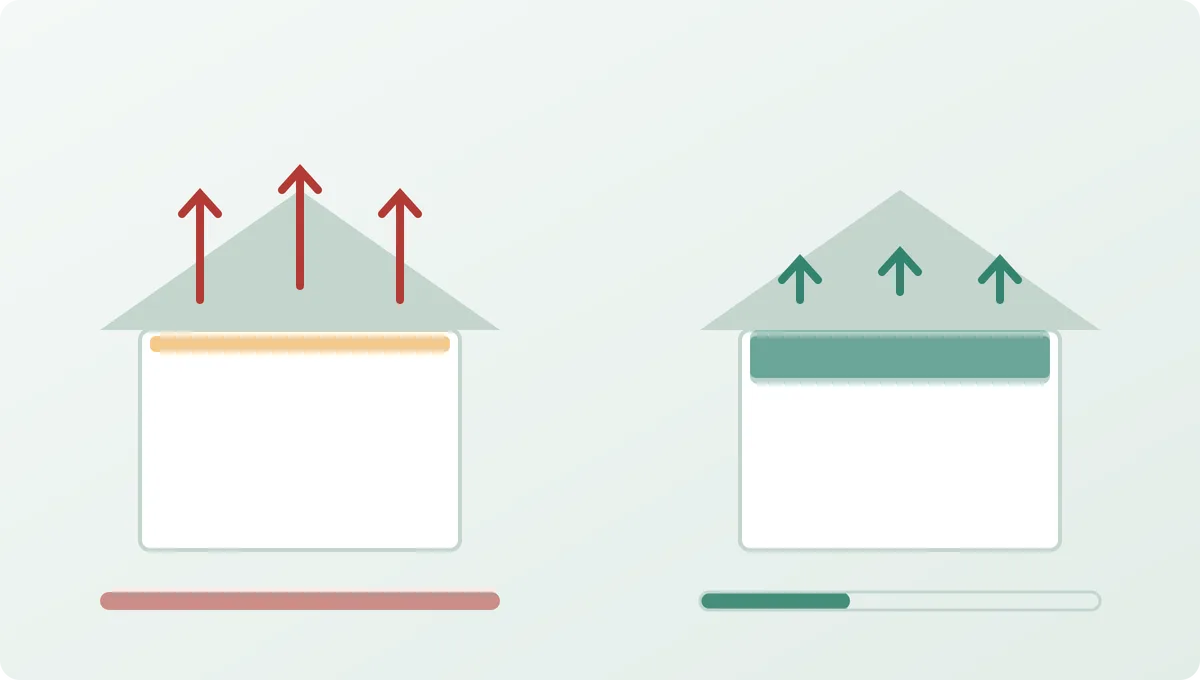
Heat rises, and in most homes, the attic is where it escapes fastest. It's commonly cited as the single largest source of heat loss in a typical house — often responsible for around 25% of a home's total heat loss in winter, with the same pathway working in reverse each summer as attic heat radiates down into living space. Despite how much impact it has, the Department of Energy estimates that roughly 90% of American homes are under-insulated relative to current recommendations. That's not a niche problem — it's the default condition of most housing stock.
The real savings number
You'll see energy savings claims all over the place for this project — some marketing sources cite figures as high as 30–45%. Those aren't necessarily fabricated, but they typically describe a best-case scenario: a home starting from zero insulation, combined with comprehensive whole-house air sealing, not attic insulation in isolation. The consistent, well-documented baseline comes from the EPA's ENERGY STAR program:
| Metric | Typical savings |
|---|---|
| Heating & cooling costs | ~15% average |
| Total household energy costs | ~11% average |
This figure specifically covers air sealing plus adding insulation in attics, floors over crawl spaces, and basement rim joists — the combination, not attic work alone. It's the number to use for realistic budgeting; treat anything well above it as an upper bound rather than a typical outcome.
A worked example
Concrete numbers make this easier to plan around. Take a 1,500 sq ft home in a cold climate, currently insulated to R-19, upgrading to the recommended R-49:
- Annual heating and cooling cost before upgrade: $1,800
- Estimated savings at 15%: $270 per year
- Cost of the insulation upgrade: ~$1,200
- Simple payback period: about 4.4 years
After that payback period, the $270 a year keeps going straight to savings for as long as the insulation performs — which, for blown-in fiberglass or cellulose kept dry, is typically decades.
The step most people skip: air seal first
Adding insulation without sealing air leaks first is, by wide consensus, the single most common mistake in this project — and it meaningfully changes your payback math. Air leakage (gaps around top plates, wiring penetrations, recessed lights, and the attic hatch itself) can account for 25% to 40% of a home's total heating and cooling losses on its own, separate from simple heat conduction through under-insulated material.
One real-world example from a professional energy auditor illustrates why order matters: in a 1982 home with 1,000 sq ft of insulated attic surface and 600 sq ft left uninsulated, the insulation upgrade alone was projected to pay for itself in about 3 years. Air sealing alone, by contrast, was projected at roughly 22 years. Done together, the combined payback dropped to about 4.5 years — each measure made the other more effective than either would be alone. The lesson: insulation performs best on a properly sealed attic floor, not as a substitute for sealing it.
How much R-value is actually enough?
R-value gains follow a curve of diminishing returns. Going from R-0 (no insulation) to R-30 makes an enormous difference in heat loss. Going from R-38 to R-49, or R-49 to R-60, produces a much smaller incremental improvement each step. The Department of Energy's climate zone recommendations exist precisely to identify the point where additional material stops being cost-effective for your region — targeting R-30 in warm climates up through R-49 to R-60 in the coldest zones. Our attic insulation cost calculator maps these zone targets directly so you're not guessing at how far to go.
Signs you're probably under-insulated
- You can see the attic floor joists — if insulation doesn't fully cover them, you almost certainly don't have enough.
- Ice dams in winter — heat escaping through the attic melts roof snow, which refreezes at the eaves.
- Uneven room temperatures — rooms directly under the attic run noticeably hotter in summer or colder in winter.
- Energy bills that feel disproportionate to your home's size and local climate.
- HVAC that runs constantly, even with a reasonable thermostat setting.
- A home built before 1990 — insulation standards and typical installed levels have changed significantly since then.
Savings beyond the utility bill
The energy bill is the headline number, but it isn't the only return. Reduced HVAC runtime from better insulation is commonly cited as extending furnace and AC equipment lifespan by several years, since the system cycles less often and works less hard when it does run. Comfort improves too — fewer drafts, more consistent room-to-room temperatures, and warmer floors in winter are all real, if harder to put a dollar figure on.
A correction on the tax credit
You may see it claimed that the federal insulation tax credit covers installation labor, unlike windows and doors. That's not accurate: under the Energy Efficient Home Improvement Credit (Section 25C), the 30% credit — capped at $1,200 per year — applies to the cost of qualifying insulation materials. Installation labor is not included, the same as most other envelope-related items under this credit. On a $2,500 material cost, that's a $750 credit reducing your effective cost to $1,750, but budget based on materials cost alone when estimating your credit, not your full contractor invoice.
What does attic insulation actually cost?
A typical professional installation runs $1,500 to $3,500 for an average home, varying by material, target R-value, and your current starting point. Our attic insulation cost calculator estimates your specific project cost and then calculates your projected annual savings and payback period based on your actual square footage, current insulation level, and target R-value — the same math walked through in this article, personalized to your home.
Frequently asked questions
How much money does attic insulation actually save per year?
Most homeowners save $200 to $600 per year, based on the EPA's estimate of roughly 15% average savings on heating and cooling costs. The exact amount depends on your current energy bill, climate, and how under-insulated your attic was to start.
Is it worth air sealing before adding insulation?
Yes, strongly. Air leakage can account for 25% to 40% of a home's heating and cooling losses on its own, separate from insulation levels. Skipping air sealing is widely considered the most common mistake in this project and can more than triple your payback period.
Does the federal tax credit cover installation labor for insulation?
No. The Energy Efficient Home Improvement Credit (Section 25C) covers 30% of qualifying insulation material costs, up to $1,200 per year, but does not include installation labor.
Is there a point where more attic insulation stops being worth it?
Yes. R-value improvements follow diminishing returns — going from no insulation to a moderate level produces dramatic savings, while going beyond your climate zone's recommended level produces comparatively little additional benefit.
Put a number on it
Estimate attic insulation by material, target R-value and attic area — with estimated annual savings and…
Open the Attic Insulation Cost Calculator →Sources & standards
- ENERGY STAR — Seal and Insulate
- U.S. DOE — Insulation
- U.S. DOE — Air Sealing Your Home
- IRS — About Form 5695, Residential Energy Credits
- 26 U.S.C. §25C — Energy Efficient Home Improvement Credit
This guide is general information, not professional advice. Building codes, permit requirements and safety rules are set locally and change over time — your building department and a licensed professional are the authorities for your property. Cost figures are HomeEstimatorHub estimates, not quotes — see how they are calculated.
Keep reading
More guides in Energy & Insulation.
Price it
Estimators for the work this guide describes.