
Home Systems
How Long Do Garage Door Springs Last?
Standard torsion springs are rated for about 10,000 cycles — roughly 7 to 10 years for a typical household opening the door 3 to 4 times a day. High-cycle springs last 20,000 to 100,000 cycles, or 15 to 25+ years. Springs are rated by usage, not by age on the calendar, so a garage used as a main entry point burns through that rating years faster than the same spring in a rarely-used detached garage.

The short version
- Springs are rated in cycles, not years. One open plus one close is a single cycle, so a busy household burns through a rating far faster than the label implies.
- Torsion outlasts extension. Roughly 10,000–15,000 cycles (7–10 years) against 5–7 years for extension springs.
- Replace them in pairs. The second spring has done exactly the same number of cycles as the one that just failed.
- Never a DIY repair. A wound torsion spring stores enough energy to lift a 200+ lb door, and it releases all of it at once.
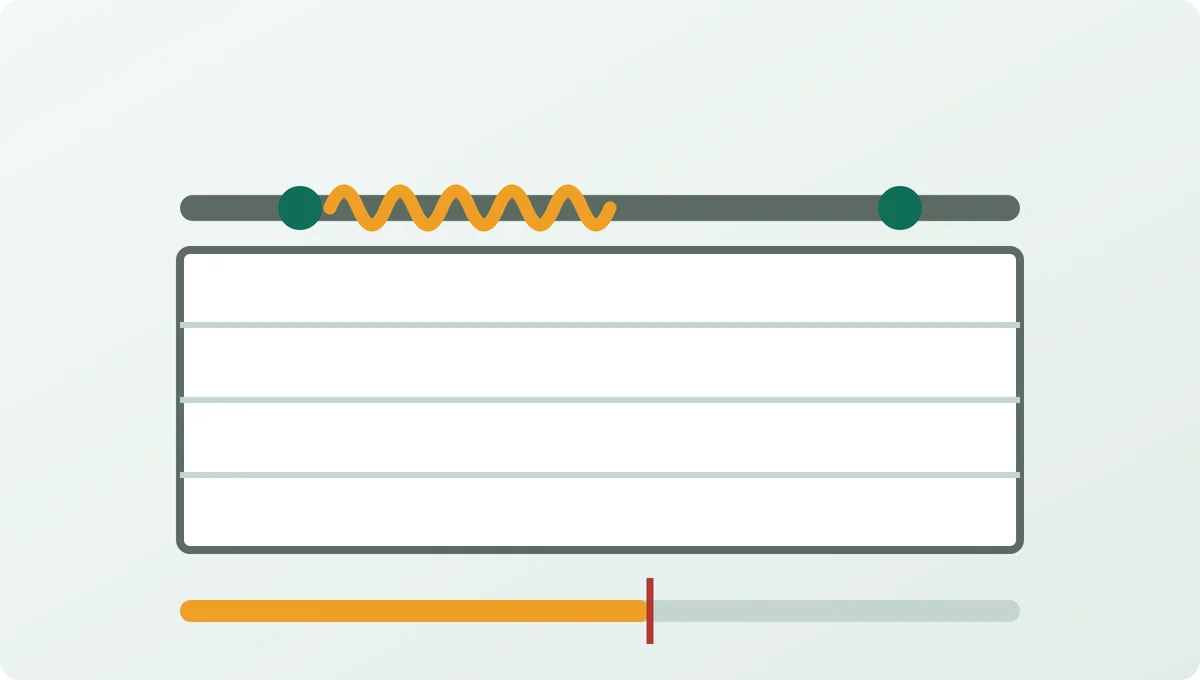
Springs are rated in cycles, not years — here's how to calculate yours
One cycle equals one full open-and-close of the door. Manufacturers rate springs by how many cycles they're built to handle, and translating that into a number of years only works once you know your household's actual usage. The formula is simple:
Cycles per day × 365 = annual cycles
Spring's rated cycles ÷ annual cycles = estimated years remaining
A household that opens the garage door 4 times a day runs through roughly 1,460 cycles a year. A standard 10,000-cycle spring at that pace lasts about 7 years. Push that same household to 6 cycles a day — a garage used as the main entry point, or a second driver added to the house — and annual cycles jump to around 2,190, cutting the spring's life to roughly 4.5 years. The spring itself didn't change; the usage did.
Torsion vs. extension springs
| Factor | Torsion springs | Extension springs |
|---|---|---|
| Mounting | Horizontal shaft above the door | Along the side tracks |
| Mechanism | Twists to store energy | Stretches to store energy |
| Typical lifespan | 10,000–15,000 cycles (7–10 yrs) | 5–7 years |
| Why the difference | Force distributed evenly, fewer moving parts | More moving parts, more wear points |
Torsion springs generally last longer and are the more common setup in modern residential doors. If your door has two torsion springs and one breaks, professionals typically recommend replacing both at the same time — since they've carried the same number of cycles, the second one is usually not far behind.
What shortens spring life faster than the rating suggests
- Usage frequency — the single biggest factor, as shown in the calculation above.
- Climate — humid or salt-air environments accelerate rust, which increases friction between coils and weakens the steel. Cold climates make steel more brittle and prone to snapping in winter.
- Lack of lubrication — dry coils bind and grind against each other, increasing both wear and noise.
- Door weight — heavier doors, including glass, wood, or double-wide doors, put more strain on springs with every cycle.
- Improper installation or wrong spring size — an undersized spring works harder on every single cycle, shortening its effective life regardless of its cycle rating.
The calculation
Cycles, not years
Warning signs your springs are close to failing
Springs rarely fail without any warning — the signs are just easy to miss if you don't know what to look for:
- A loud bang or pop from the garage — the classic sign of a spring that has already broken.
- The door feels heavy when lifted manually. Pull the red emergency release cord to disconnect the opener, then lift the door by hand. A healthy, properly balanced door should lift smoothly and feel nearly weightless. If it takes real effort or both hands, the springs have lost significant tension.
- A visible gap in the spring coils. Healthy coils sit tightly wound and touching. Daylight between coils — even a small separation — means the spring is stretching and losing its ability to hold tension.
- The door rises unevenly or crooked — a sign one spring is weaker than the other, common with two-spring systems as one nears failure before its pair.
- The door stops after only a few inches — the opener straining to lift the door without spring assistance.
- Unusual noises — squeaking or screeching often points to a lack of lubrication; grinding can mean a spring that's binding as it fails.
If you notice any of these, stop using the door and call a professional rather than pushing through it. Continuing to operate a door with a failing spring forces the opener motor to work beyond its intended load, which can burn out the motor, stress cables and drums unevenly, and in some cases cause the door to come down harder than normal — a real safety risk, not just an inconvenience.
Why this is never a DIY repair
A wound torsion spring stores enough energy to lift a 200+ pound door, and that same stored energy is exactly what makes it dangerous to handle without the right tools and training. The U.S. Consumer Product Safety Commission identifies garage doors as one of the largest moving objects in a typical home and has documented serious injuries tied to spring-related incidents over decades of reporting. If a spring releases its tension unexpectedly during an amateur repair attempt, the result can be severe injury. This is genuinely professional-only work — not a matter of skill level, but of the physics involved. If you need a size on the actual cost of professional replacement, our garage door replacement cost calculator includes a dedicated spring-only pricing path separate from full door replacement.
How to extend the life of your springs
- Lubricate every 3 to 6 months using a silicone-based spray or white lithium grease along the full length of the coils. Avoid WD-40 — it's a degreaser, not a lubricant, and can actually dry out the metal over time rather than protecting it.
- Schedule an annual professional inspection. A technician can check balance, inspect cables and bearings, and catch early wear before it becomes a breakdown — protecting the whole door system, not just the springs.
- Consider a high-cycle spring at your next replacement if your household uses the garage door heavily — more than about 6 times a day. The higher upfront cost often pays for itself in avoided service calls over a 15-25 year lifespan instead of 7-10.
Frequently asked questions
How many years does a garage door spring last?
A standard torsion spring typically lasts 7 to 10 years with average household use (about 4 cycles per day). High-cycle springs last significantly longer, often 15 to 25 years, depending on the specific cycle rating and actual usage frequency.
How do I know if my garage door spring is about to break?
Watch for a door that feels unusually heavy when lifted manually, a visible gap in the spring coils, the door rising unevenly, or unusual squeaking or grinding noises. A loud bang means a spring has already broken.
Should I replace both springs if only one breaks?
Yes, this is standard professional practice for two-spring systems. Since both springs have experienced the same number of cycles, the surviving spring is usually close to failure too, and replacing both avoids a second service call soon after.
Can I replace a garage door spring myself?
No. Torsion springs store enough energy to lift a 200+ pound door, and mishandling that stored tension can cause severe injury. This should always be done by a trained, licensed professional with the correct tools.
Put a number on it
Estimate a garage door by size, material and insulation R-value, or price a spring replacement on…
Open the Garage Door Replacement Cost Calculator →Sources & standards
This guide is general information, not professional advice. Building codes, permit requirements and safety rules are set locally and change over time — your building department and a licensed professional are the authorities for your property. Cost figures are HomeEstimatorHub estimates, not quotes — see how they are calculated.
Keep reading
More guides in Home Systems.
Price it
Estimators for the work this guide describes.