
Home›Guides›Home Safety & Hazards
Home Safety & Hazards
Water Damage Categories Explained: Clean, Gray, and Black Water
Water damage falls into three IICRC-defined categories based on contamination, not volume: Category 1 (clean) from a sanitary source, Category 2 (gray) with contamination that can cause illness, and Category 3 (black) that's grossly contaminated with sewage or pathogens. Category matters more than how much water there is, because it determines what gets dried versus torn out, what protective equipment is required, and how your insurance claim gets scoped — and every category can degrade into a worse one if it isn't addressed within 24 to 72 hours.

The short version
- Category and Class are two different systems. Category is what is in the water. Class is how much material is wet. People mix them up constantly.
- Category is about contamination, not volume. Clean, gray and black describe the health risk, not the size of the loss.
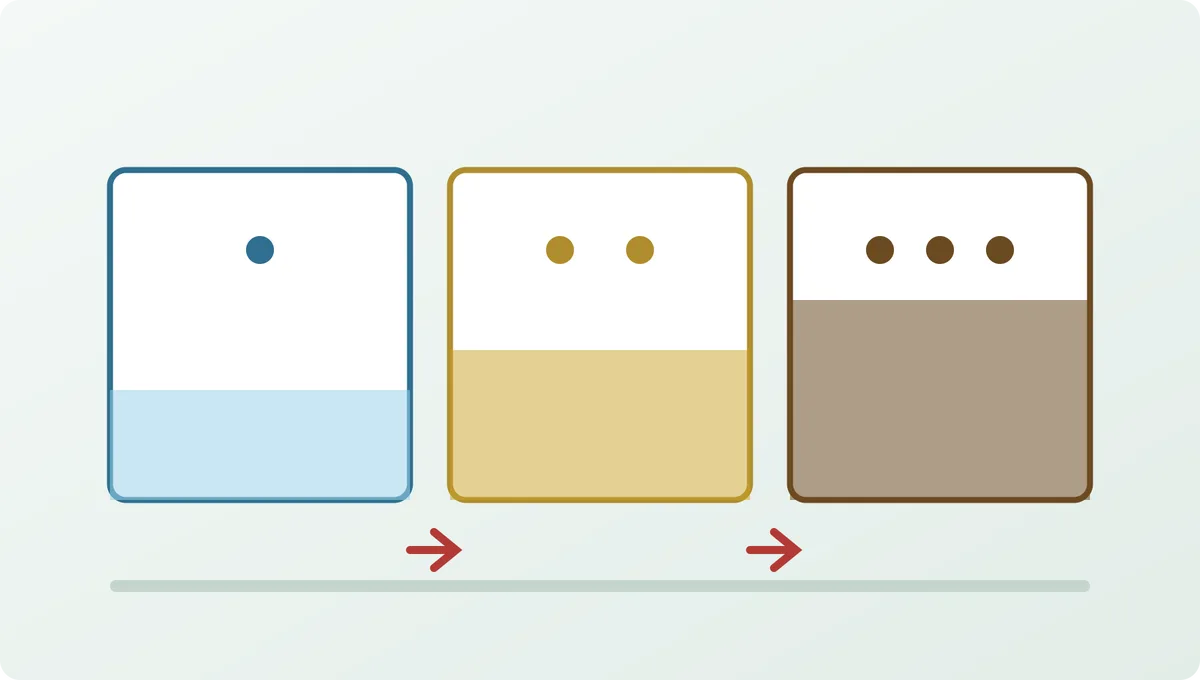
- The clock never stops. Category 1 becomes 2 in roughly 24–48 hours, and 2 becomes 3 in roughly 48–72 hours of stagnation.
- The first 24 hours decide what survives. Act inside that window and most Category 1 materials can be dried in place rather than cut out.
The framework restorers actually use: IICRC S500
When a restoration contractor or insurance adjuster refers to "Category 2" or "Class 3" water damage, they're using a specific technical framework — the ANSI/IICRC S500 Standard for Professional Water Damage Restoration. It's not industry jargon. It's the consensus standard that insurance carriers, restoration contractors, and building professionals across the US rely on to determine what gets salvaged, what gets removed, what protective equipment is required, and what your insurance claim should actually cover.
The two systems people mix up: Category vs. Class
This is the single most common point of confusion, so it's worth clearing up before anything else. The S500 defines two separate classification systems that describe completely different things:
- Category (1 through 3) — describes how contaminated the water is. This is what determines health risk, required PPE, and which materials can be saved.
- Class (1 through 4) — describes how much water is involved and how hard it will be to dry. Class 1 is the least water; Class 4 is a specialty drying situation for dense, low-porosity materials like hardwood, concrete, or plaster.
One important correction: there is no "Category 4" in the IICRC S500 standard — categories only go from 1 to 3. If you've heard someone reference "Category 4 water damage," they're most likely confusing it with Class 4, describing a separate hazardous-materials situation (like asbestos or fuel contamination), or mixing up hurricane categories with water damage classification — a mix-up common enough that several restoration authorities call it out directly. This article focuses on Category, since that's what determines contamination risk and salvageability — the questions homeowners actually need answered first.
Category 1: Clean water
Category 1 water originates from a sanitary source and poses no substantial health risk at the time of loss. Common sources include a broken supply line, an overflowing tub or sink with clean water, a malfunctioning ice maker line, or a burst sprinkler pipe. If extraction and drying begin within roughly 24 hours, most Category 1 materials — including carpet and drywall — can typically be dried in place rather than removed.
The catch: Category 1 doesn't stay Category 1 for long. Once it contacts building materials, dust, and soils, it begins picking up contamination.
Escalation timeline
Clean water does not stay clean
Category 2: Gray water
Category 2 water contains significant contamination capable of causing illness or discomfort through contact or ingestion. Common sources include washing machine or dishwasher discharge, a toilet bowl overflow without feces, sump pump failure, a broken aquarium, and hydrostatic seepage from outside the structure. It also includes any Category 1 water that's been left standing too long.
Category 2 requires real precautions: gloves and protective equipment for anyone handling it, antimicrobial treatment of affected surfaces, and — critically — careful evaluation of porous materials. Rather than drying drywall in place, restorers typically perform a "flood cut," removing the lower 12 to 24 inches of contaminated drywall while treating and drying what remains above the waterline.
Category 3: Black water
Category 3 water is grossly contaminated and can contain pathogenic, toxigenic, or otherwise harmful agents. Sources include sewage backflow, toilet overflow with feces, and any ground-source flooding — river overflow, storm surge, or standing floodwater carrying soil and chemicals from outside. Category 2 water left untreated for roughly 48 to 72 hours is also reclassified as Category 3.
Category 3 changes everything about the response. All porous materials that contacted the water — drywall, carpet, carpet pad, insulation, any paper-faced material — must be removed. This isn't a judgment call; it's non-negotiable under the S500 standard and standard insurance claims practice. Crews handling Category 3 water use full protective equipment: waterproof gloves, goggles, at minimum an N95 respirator, and protective coveralls. This is genuinely biohazard-level work — not a DIY project under any circumstances.
Category comparison at a glance
| Factor | Category 1 (Clean) | Category 2 (Gray) | Category 3 (Black) |
|---|---|---|---|
| Common sources | Supply line, clean tub overflow, ice maker | Washing machine, toilet overflow (no feces) | Sewage, toilet overflow (feces), floodwater |
| Health risk | Minimal if addressed within 24 hrs | Illness/discomfort on contact | Serious illness — biohazard |
| Porous materials (drywall, carpet) | Often dried in place | Partial removal ("flood cut") | Full removal, no exceptions |
| PPE required | Basic gloves | Gloves, goggles, care | Full biohazard PPE |
The clock that never stops: how category escalates
This is the single most important, most actionable fact in this entire topic. Water category isn't fixed at the moment of the loss — it degrades over time, and the S500's timelines are calibrated directly against how fast mold and bacteria actually colonize wet materials:
- Category 1 → Category 2: typically within 24 to 48 hours, depending on ambient temperature and how much organic material the water has contacted. Warmer conditions accelerate this.
- Category 2 → Category 3: typically within 48 to 72 hours of continued stagnation.
The EPA and CDC both note that standing moisture can support mold colonization in as little as 24 to 48 hours under favorable temperature and humidity conditions. Every hour of delay doesn't just risk mold — it can raise the demolition scope, the PPE requirements, and ultimately what your insurance carrier will pay for. A same-day response to a "just clean water" leak isn't overcautious; it's the difference between a dry-in-place job and a full material removal.
Why category matters for your insurance claim
Insurance carriers use the documented category as the baseline for evaluating a mitigation scope. Adjusters expect the proposed work to match the category: a Category 3 loss should show complete porous material removal in the invoice, and a mismatch between the documented category and the actual work performed is one of the most common triggers for a claim dispute — in both directions. A contractor can under-scope a job by missing hidden moisture that later causes a mold claim, or over-scope it by charging for demolition a Category 1 loss never required. Proper documentation — moisture mapping, timestamped readings, and category determination — is what protects you on both sides of that equation. If a structural component like a foundation or sewer line is involved in the source of the loss, it's worth having that assessed separately; our sewer line replacement cost calculator covers the underlying repair if a sewage backup traces back to a failed line.
Should you ever clean up water damage yourself?
For a small, genuinely Category 1 event — a cup of clean water from a supply line, addressed immediately — basic cleanup and fans are reasonable. Anything beyond that changes the calculus quickly. Category 2 water that's saturated carpet, drywall, or padding, or covers more than a small area, is worth professional extraction and treatment. Category 3 water should never be handled without professional equipment and training, full stop — the health risk is real, not theoretical. If mold has already started developing by the time you're addressing the water, that's a separate problem worth pricing separately; our mold remediation cost calculator covers that scope. And if the water damage originated from a basement or crawl space with a recurring moisture problem, addressing that root cause matters as much as the cleanup itself — see our basement waterproofing cost calculator for that side of it.
What does water damage restoration actually cost?
Cost tracks category and class closely, since both drive how much material gets removed versus dried and how much specialized equipment and labor the job requires. National averages run roughly $3,800 for a typical claim, with a broad range from a few hundred dollars for a small Category 1 event to $16,000 or more for extensive Category 3 losses. Our water damage restoration cost calculator walks through both category and class, along with affected area, to give you an instant estimate specific to your situation.
Frequently asked questions
Is there a Category 4 water damage?
No. The IICRC S500 standard only defines Categories 1 through 3. People who reference "Category 4" are usually confusing it with Class 4 (a specialty drying designation for dense, low-porosity materials), a separate hazardous-materials situation, or hurricane categories.
How long before clean water becomes contaminated?
Category 1 (clean) water typically reclassifies to Category 2 (gray) within 24 to 48 hours if it isn't extracted and dried, due to microbial growth and contact with building materials and dust. Warmer temperatures accelerate this timeline.
Can carpet be saved after water damage?
It depends on the category. Category 1 carpet can often be dried in place and saved if action is fast. Category 2 carpet and padding are frequently removed, particularly padding, due to contamination. Category 3 carpet and padding must always be removed and disposed of.
Is a sewage backup always Category 3?
Yes. Sewage backup is Category 3 (black water) by definition under the IICRC S500 standard, even if the water appears relatively clear at first — it carries pathogens regardless of visible appearance and must be handled as a biohazard.
Put a number on it
Estimate sewer replacement by line length, depth and surface above it. Traditional excavation, pipe bursting and…
Open the Sewer Line Replacement Cost Calculator →Sources & standards
- IICRC — Published Standards (incl. S500)
- U.S. EPA — Mold Remediation Guidance
- CDC — Mold and Your Health
This guide is general information, not professional advice. Building codes, permit requirements and safety rules are set locally and change over time — your building department and a licensed professional are the authorities for your property. Cost figures are HomeEstimatorHub estimates, not quotes — see how they are calculated.
Keep reading
More guides in Home Safety & Hazards.
Price it
Estimators for the work this guide describes.