
Home›Guides›Roofing & Exterior
Roofing & Exterior
Signs You Need a New Roof (Not Just a Repair)
The clearest signs you need full replacement, not just a repair: shingles curling or missing across multiple areas, heavy granule loss in your gutters, daylight or water stains visible in the attic, a sagging roof deck, and a roof already past 20-25 years old. One isolated sign on an otherwise sound, younger roof is usually just a repair. Two or more of these showing up together — especially on a roof already past 20 years — means repair is a temporary fix for a problem that's already systemic.

The short version
- Isolated or widespread is the whole question. A few curled shingles in one spot is a repair. The same problem across several slopes is not.
- About 30% damage is the threshold. Past that, per-square-foot repair costs start approaching a full reroof without resetting the lifespan.
- Attic signs are the urgent ones. Daylight through the boards, sagging, or active water means it is already getting through.
- Algae streaks are not a replacement trigger. A reputable roofer will tell you that rather than using discoloration to upsell.
- Check the ventilation. Poor attic venting can halve a roof’s real-world lifespan against its rated one.
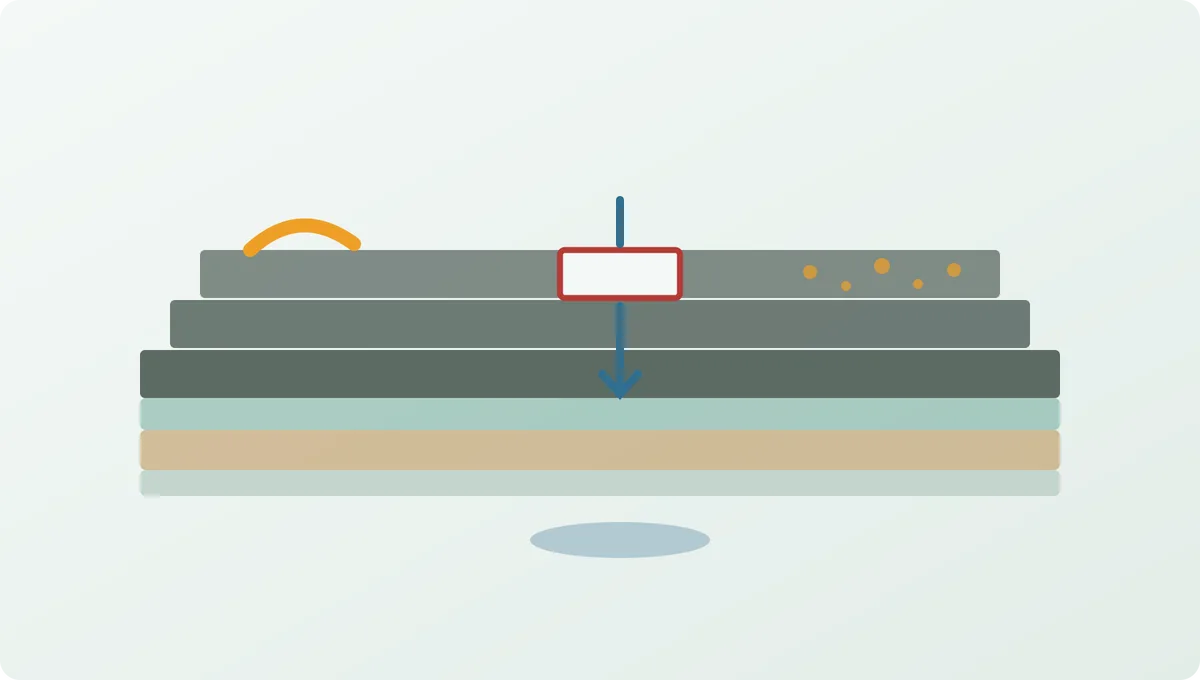
The single clearest rule: isolated vs. widespread
Every reputable roofer runs the same mental checklist, and it comes down to one distinction: is the damage isolated on an otherwise sound roof, or is it showing up in multiple places at once? A roof under about 15 years old with a localized problem — wind took a patch of shingles, a pipe boot split, flashing pulled loose at one chimney — is almost always a repair. A roof past 20 years showing trouble in more than one spot is a different situation entirely: at that point, every repair dollar is essentially a down payment on a replacement that's coming anyway, just deferred and more expensive in total.
Signs to check from the ground
- Curling or cupping shingles — edges turning up or down indicate moisture infiltration or heat damage. A few curled shingles in one section can be repaired; curling across multiple slopes cannot.
- Cracking shingles — a sign of brittleness from UV exposure and thermal cycling, meaning the material itself has broken down, not just a single shingle.
- Missing or bald shingles — check after any day of high wind. A single missing shingle is a simple repair; several missing across the roof suggests the whole surface is weakening.
- Granules collecting in your gutters — the coarse, sand-like grit that protects shingles from UV rays. Some loss is completely normal on a brand-new roof (manufacturing excess), but heavy, ongoing granule loss on a roof more than a few years old means the shingles are losing their protective layer.
One important nuance most homeowners get wrong: algae streaks and moss in shaded areas are usually a cleaning or minor repair issue, not a replacement trigger by themselves. A reputable roofer should tell you that directly rather than using discoloration to upsell a full replacement.
Signs to check from the attic — the most urgent category
These three signs deserve immediate attention regardless of your roof's age, because they mean water or light is already getting through:
- Daylight visible through the roof boards — a direct entry point for water, not a future risk.
- Water stains or moisture on the rafters or ceiling — evidence that infiltration is already happening, even if you haven't noticed a drip yet.
- A sagging roof deck or ridge line — the most serious sign on this list, often indicating structural moisture damage to the decking itself, not just the shingles above it.
Decision chart
Where repair stops paying
Warning signs by material
| Material | Typical lifespan | Material-specific warning signs |
|---|---|---|
| Asphalt shingle (~80% of US homes) | 20–30 years | Curling, cracking, granule loss, bald patches |
| Metal | 40–70 years | Rust or corrosion spots, loose or lifting panels, large hail dents |
| Tile | 50+ years | Multiple cracked/broken tiles, deteriorating mortar at edges and peaks |
How much roof damage is too much to repair?
There's a genuinely useful threshold worth knowing: once damage covers roughly 30% or more of the roof's total surface, the per-square-foot cost of repairing it approaches the cost of full replacement — but without the benefit of a new warranty covering the whole roof. Below that threshold, targeted repair on an otherwise sound roof is usually the smarter financial move. Above it, you're often paying replacement-adjacent money for a roof that's still, on average, older and less reliable than a new one.
One factor most homeowners never check: attic ventilation
Poor attic ventilation can cut a roof's real-world lifespan roughly in half compared to its manufacturer rating — trapped heat and moisture accelerate shingle deterioration from underneath, in a way that's invisible from the ground or even from inside the attic until damage is advanced. In colder climates, freeze-thaw cycling and ice dam formation shorten shingle life further, sometimes by 3 to 5 years below the rated lifespan even with good ventilation. This is one of the few roof-life factors actually within a homeowner's control: our attic insulation cost calculator covers what proper attic sealing and insulation costs, which directly protects the roof investment above it.
If a storm caused the damage, don't decide anything yet
Wind, hail, or fallen debris damage is a different situation from ordinary wear — before committing to a repair-or-replace decision, get a professional assessment, since your homeowners insurance may cover more than a simple patch if the damage is storm-related and documented promptly. Flashing that's pulled away, cracked, or rusted around chimneys, vents, and skylights is also worth checking specifically after any storm, since it's a common, often-overlooked leak source. If chimney flashing is part of the concern, our chimney repair cost calculator covers that separately from the broader roof scope. And if you're reassessing your overall coverage after storm damage, our home replacement cost calculator includes a quick check against the insurance industry's 80% coverage rule.
What does a new roof cost, and is it worth it?
A full roof replacement delivers a genuinely solid return at resale — commonly cited around 60% of cost recouped, according to national Cost vs. Value data — while also eliminating one of the biggest objections buyers raise during a home inspection. Beyond resale, a roof replacement is also a natural moment to address related exterior items at once: many homeowners pair it with new gutters, since old gutters rarely survive roof work undamaged. Our roof replacement cost estimator covers all major materials and roof pitches, and our gutter installation cost calculator is worth pricing alongside it if yours are original to the house.
Frequently asked questions
How do I know if my roof needs repair or full replacement?
A localized problem on a roof under about 15 years old is usually a repair. Multiple warning signs appearing together, or any single sign on a roof already past 20 years, points toward replacement. Damage covering more than about 30% of the roof also generally favors replacement over repair.
Is granule loss always a sign I need a new roof?
Not always. Some granule loss is normal on a brand-new roof from manufacturing excess. But heavy, ongoing granule loss — visible as coarse, sand-like grit collecting in gutters — on a roof more than a few years old is a genuine warning sign that the shingles are losing their UV protection.
Does moss or algae on my roof mean I need to replace it?
Usually not by itself. Algae streaks and moss in shaded areas are typically a cleaning or minor maintenance issue rather than a replacement trigger, unless they're accompanied by other structural warning signs.
How long should an asphalt shingle roof last?
Asphalt shingles are typically rated for 20 to 30 years, though real-world lifespan varies with climate and attic ventilation. Poor ventilation can cut that lifespan roughly in half, and cold climates with freeze-thaw cycling can shorten it by an additional 3 to 5 years.
Put a number on it
Estimate attic insulation by material, target R-value and attic area — with estimated annual savings and…
Open the Attic Insulation Cost Calculator →Sources & standards
- National Roofing Contractors Association
- International Code Council — I-Codes
- Remodeling — Cost vs. Value Report
This guide is general information, not professional advice. Building codes, permit requirements and safety rules are set locally and change over time — your building department and a licensed professional are the authorities for your property. Cost figures are HomeEstimatorHub estimates, not quotes — see how they are calculated.
Keep reading
More guides in Roofing & Exterior.
Price it
Estimators for the work this guide describes.