
Home›Guides›Outdoor & Structures
Outdoor & Structures
Asphalt vs. Concrete Driveway: Which Lasts Longer?
Concrete lasts roughly twice as long — 25 to 50 years versus asphalt's 15 to 20 years — but it also costs 30% to 60% more upfront, and the two materials perform best in opposite climates. Asphalt flexes with freeze-thaw ground movement, making it the stronger choice in cold climates, while concrete resists the heat distortion that can soften and rut asphalt in extreme summer temperatures. Because concrete costs roughly twice as much and lasts roughly twice as long, the annualized cost between the two is often closer than the lifespan gap alone suggests.

The short version
- Asphalt is 30–60% cheaper up front; concrete lasts about twice as long. 15–20 years against 25–50.
- Climate decides it. Asphalt flexes with freeze-thaw movement. Concrete is rigid, which suits heat and fails faster where the ground keeps moving.
- Asphalt can be resurfaced over its existing base. Concrete generally cannot, and patches stay visible permanently.
- Neither is a DIY job. Both need machinery and proper base preparation to reach their rated lifespan.
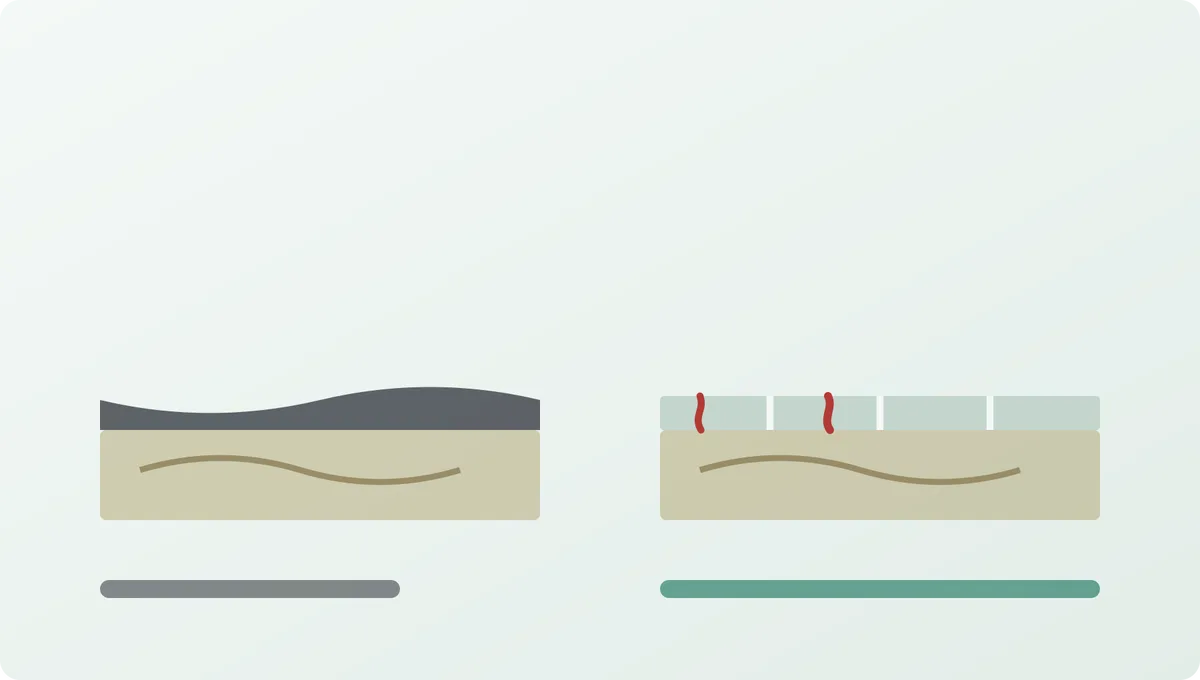
Upfront cost
| Material | Cost per sq ft installed | Typical 480 sq ft driveway |
|---|---|---|
| Asphalt | $3–$7 | $1,440–$2,880 |
| Concrete | $6–$12 | $2,880–$5,760 |
Asphalt typically runs 30% to 60% cheaper than concrete for the same driveway, and that gap widens further if you're considering a decorative concrete finish rather than a plain slab.
Lifespan
| Material | Typical lifespan | Maintenance |
|---|---|---|
| Asphalt | 15–20 years (up to 25 with maintenance) | Sealcoat every 2–3 years |
| Concrete | 25–50 years | Minimal until cracking begins |
Concrete's lifespan advantage is genuinely dramatic — roughly double asphalt's under comparable conditions. But as the sections below show, that number alone doesn't settle the question, since climate, maintenance, and repair mechanics all shift the practical answer significantly.
Why climate flips the answer: the physics of flexible vs. rigid
This is the mechanism behind nearly every "which is better" claim you'll read about these two materials, and it explains why the answer genuinely depends on where you live rather than which material is objectively superior. Asphalt is a flexible surface — it moves slightly with ground shifts caused by freeze-thaw cycles instead of cracking, and road salt and de-icing chemicals don't damage it. This is exactly why asphalt performs so well in cold-climate states. Concrete is rigid, and that same freeze-thaw movement that asphalt absorbs can cause concrete to crack, spall, and flake — especially in a driveway's first year if it wasn't properly cured or isn't air-entrained for cold-weather use.
The relationship inverts completely in hot climates. Asphalt is petroleum-based, and extreme heat can make it soften, turn tacky or oily, and develop permanent tire ruts under the combined weight and heat of parked vehicles — a well-documented failure pattern in Sun Belt states specifically. Concrete resists heat distortion and holds its shape reliably in the same conditions that cause asphalt problems. In short: asphalt wins in the cold, concrete wins in the heat, and neither material is universally the "better" choice independent of climate.
The maintenance asymmetry: resurfacing vs. full replacement
This is a genuinely important, often-overlooked difference in how each material fails and gets repaired. Asphalt can be resurfaced — a fresh layer applied over the existing base — which restores the driveway without a full tear-out, extending its usable life at a fraction of full replacement cost. Concrete doesn't offer this option in the same way: once a section cracks or fails structurally, it generally needs to be fully replaced rather than resurfaced, similar to how a cracked concrete patio or slab typically requires cutting out and replacing the affected section rather than a surface-level fix. If you want to see this same pattern play out in a different application, our concrete vs. paver patio comparison covers the identical rigid-material repair limitation.
Does concrete's longer lifespan actually save you money?
This is where industry sources genuinely disagree, and it's worth presenting honestly rather than picking whichever answer sounds cleaner. Some cost analyzes find that once asphalt's recurring sealcoating costs are factored in over 20+ years, the annualized cost per year of use between the two materials ends up fairly close — concrete costs roughly twice as much but also lasts roughly twice as long, so the math partially cancels out. Other analyzes calculate a more decisive edge for concrete, estimating $8,000 to $12,000 in savings over a 30-year period once asphalt's ongoing maintenance is added up, with the initial cost premium paying for itself within 5 to 7 years. What isn't in dispute: asphalt requires far more active, recurring maintenance investment — both time and money — even in scenarios where the total lifetime dollar figure ends up similar to concrete's.
Installation timeline and resale value
Asphalt is typically usable within 2 to 3 days of installation, while concrete needs roughly a week or more of curing time before it can handle regular vehicle traffic — worth factoring in if timing matters for your project. On resale, concrete is generally viewed as the more premium material and is commonly cited as adding 5% to 10% more value to a home than a comparable asphalt driveway, though this varies by regional norms and what's typical in your specific neighborhood.
Which should you actually choose?
- Choose asphalt if — you're in a cold, freeze-thaw climate, budget is the primary constraint, you want the driveway usable within days, or you're comfortable with recurring sealcoating maintenance in exchange for lower upfront cost.
- Choose concrete if — you're in a hot climate where asphalt's heat vulnerability is a real concern, you're staying long-term and want to minimize active maintenance, or resale value and a more premium appearance matter to your decision.
Neither material is a realistic DIY project — both require specialized equipment (paving machinery for asphalt, a jackhammer and finishing tools for concrete) and professional-grade base preparation to reach their expected lifespan. Once your driveway is in, regular cleaning helps either material look its best — our pressure washing cost calculator covers what professional driveway cleaning typically costs.
What will your driveway actually cost?
Exact cost depends on size, thickness, finish, and site preparation needs. Our asphalt driveway cost estimator and concrete slab cost calculator both give instant, itemized estimates for your specific project.
Frequently asked questions
Does concrete really last twice as long as asphalt?
Yes, roughly. Concrete typically lasts 25 to 50 years compared to asphalt's 15 to 20 years, though both figures depend heavily on climate and maintenance. Concrete also costs roughly twice as much upfront, so the lifespan advantage doesn't automatically translate into a proportionally larger savings.
Is asphalt or concrete better for cold climates?
Asphalt generally performs better in cold climates. Its flexibility allows it to move with freeze-thaw ground shifts instead of cracking, and de-icing salt doesn't damage it, while concrete can crack and spall under the same conditions if not properly cured for cold weather.
Can a cracked concrete driveway be resurfaced instead of replaced?
Generally no. Concrete typically requires full replacement of the damaged section once it cracks structurally. Asphalt, by contrast, can often be resurfaced with a new top layer over the existing base, extending its life without a full tear-out.
Which driveway material adds more resale value?
Concrete is generally viewed as the more premium material and is commonly cited as adding 5% to 10% more resale value than a comparable asphalt driveway, though this varies by region and neighborhood norms.
Put a number on it
Estimate pressure washing by surface and area — driveway, siding, deck, roof, fence or gutters —…
Open the Pressure Washing Cost Calculator →Sources & standards
This guide is general information, not professional advice. Building codes, permit requirements and safety rules are set locally and change over time — your building department and a licensed professional are the authorities for your property. Cost figures are HomeEstimatorHub estimates, not quotes — see how they are calculated.
Keep reading
More guides in Outdoor & Structures.
Price it
Estimators for the work this guide describes.